

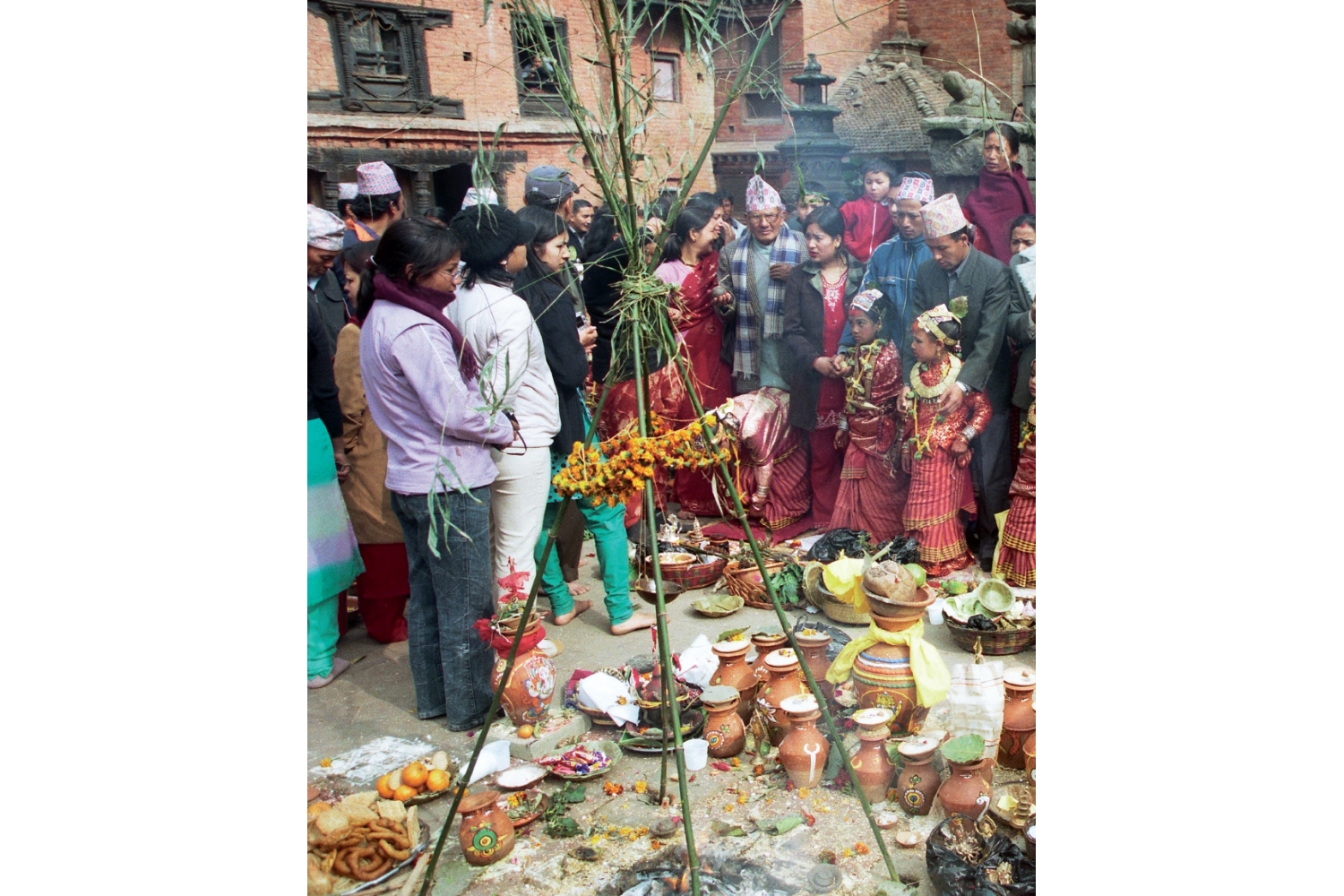
Who would have thought that votive offerings, sacrifices and feasts would be the subject of a sociological study? But that is exactly what German heritage conservationist and architect Niels Gutschow has done in his new book.
Gifts Offerings Sacrifices: The Art and Practice of Ritual Offerings of the Newars in Nepal is a detailed but clinical documentation of rituals that expounds on their cultural and religious significance.
The book starts by defining the terms ‘gift’, ‘offering’ and ‘sacrifice’, and how they differ. A gift is given voluntarily, without a payment in return. An offering is a form of worship. Sacrifice which we now associate with animal sacrifice in the context of festivals and rituals originally meant to make something holy.
There is also the term ‘दान’, a donation given to those in distress without expecting anything in return. I have a quibble here: is it really selfless when the very act of dana is to cultivate punya, merit? How about donations for disaster survivors, where the donor posts pictures offering a cheque to the Finance Minister? Can corporate social responsibility be considered a दान?
In his foreword, Gutschow notes that the details in the book are based on ‘repeated observations or even participation’, and should not be taken as the be all and end all about Newar offerings and sacrifices
Rituals which involve purifying families polluted by death for example used to be an obligation, but are now shunned by parapriests or purity specialists. There is a larger socio-political context behind this denial rooted in casteism and untouchability, we learn.









Comments
0 commentsNo comments yet — be the first.