

Across India, campaigns against invasive alien species (IAS) are gathering administrative and judicial force. Authorities now identify, map, classify, and remove species deemed ecological threats.
In the last year alone, India’s English-language press has carried sustained coverage of ecological-loss studies, State eradication drives, and human-wildlife conflicts linked to such species. What was once a niche scientific concern has become a visible public issue and priority.
Global warming is turning frogs’ sex reversal into an extinction risk
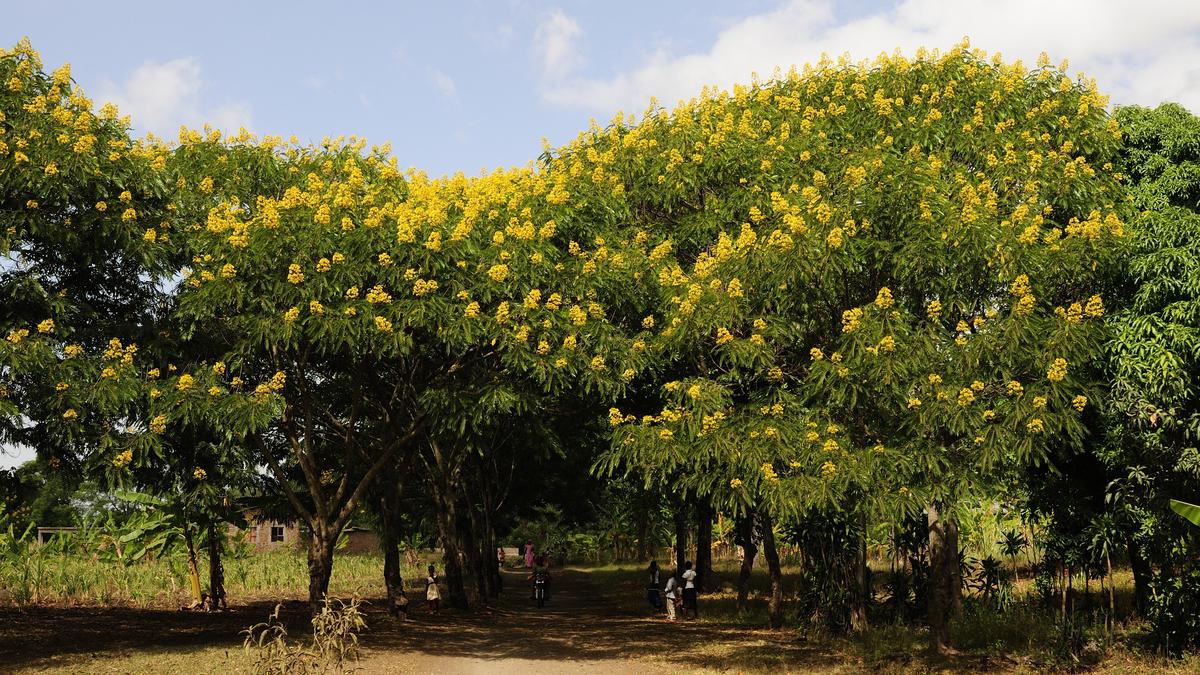
A recent Tamil Nadu court order even portrayed Prosopis juliflora shrubs as a near-Statewide threat. Government submissions have reported its clearance from 517 villages across 32 districts while the academic literature has recorded the species across the State. The plants Lantana camara and Senna spectabilis face similar campaigns elsewhere in India.
The prevailing assumption is simple: remove the invasive species and ecological recovery will follow.
Before accepting that, however, one must first ask: what condition was the landscape in before these species spread, and what conditions now sustain them?

Three patterns emerge from the evidence.
Physical changes usually came first
Throughout India, native ecological communities had already been transformed before invasive plants became dominant.
Colonial forestry, plantation expansion, and settlement removed vast tracts of forest cover. Millions of hectares were converted to tea, coffee, rubber, teak, and eucalyptus plantations. Diverse habitats gave way to simplified commercial landscapes, with lasting effects on soil biology, shade regimes, and water cycles. Logging, roads, mining, fire suppression, and chemical agriculture fragmented habitats further.
In places like Wayanad, forest edges had already degraded before species like L. camara spread into them. Biodiversity and its supporting conditions had already been decimated.
Removing a species alone can’t restore what came before. Without functioning ecological relationships, more clearing creates new vacancies, often the very conditions in which another invasive species, or the same one, can quickly return.
P. juliflora was introduced to India in 1877 as part of a misguided ecological experiment. At first seeded from the air, it spread through the guts of cattle that browsed its pods. Then came the ‘Green Revolution’ and the wider post-independent agricultural intensification. Canals expanded. Borewells multiplied. Fertiliser use surged.
As a result, waterlogging and seepage increased in some regions, depleted aquifers in others, and productivity began to decline on abandoned lands. P. juliflora is a deep-rooted phreatophyte that can exploit such altered water and soil regimes. In parts of Tamil Nadu, researchers have linked its surge to irrigation-related moisture conditions.





Comments
0 commentsNo comments yet — be the first.