

Summary
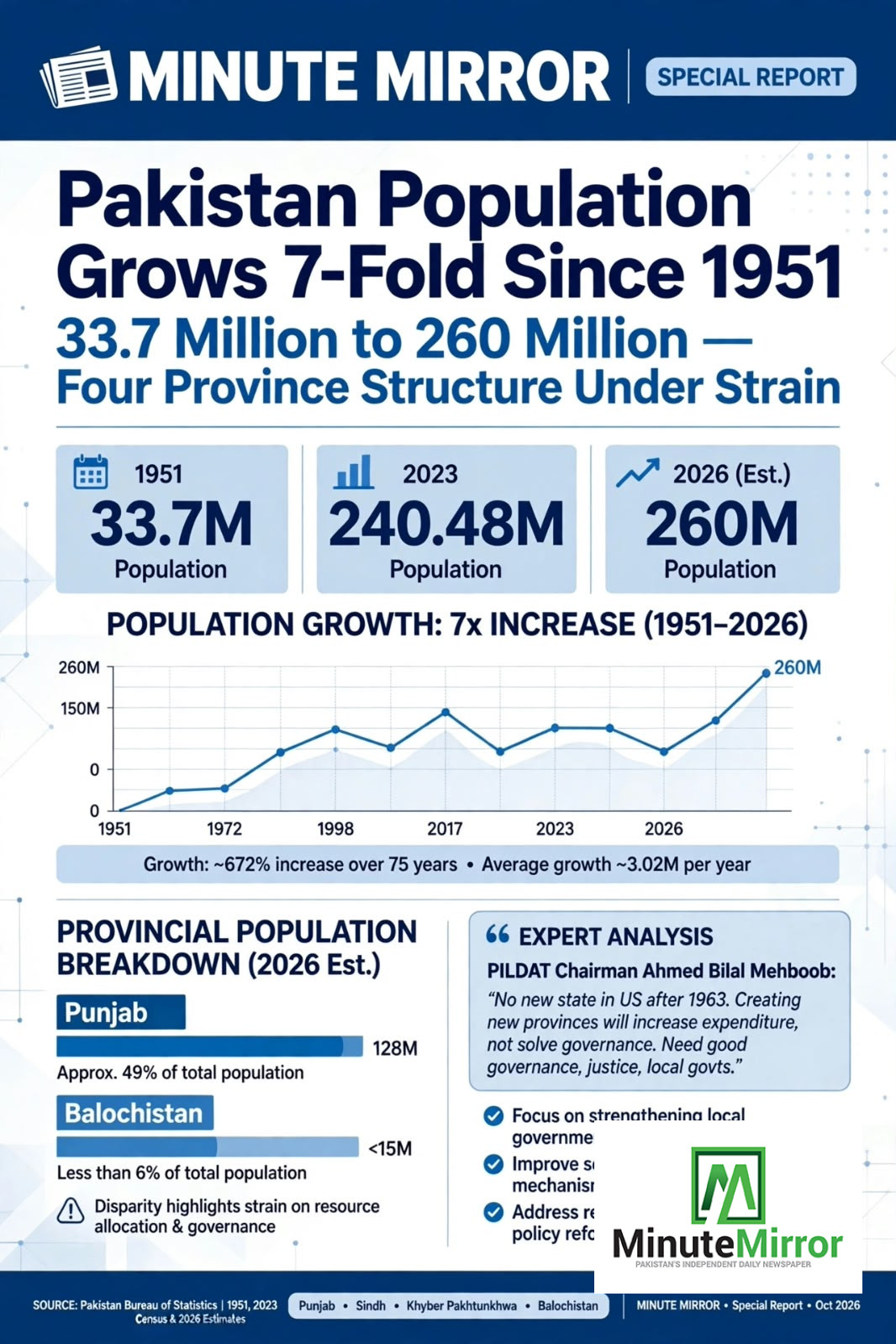
- ISLAMABAD: Pakistan’s population has grown from 33.7 million in 1951 to more than 240 million recorded in the 2023 census, intensifying pressure on the country’s administrative structure, public services and resource distribution.
- Population Growth and Regional Disparities Pakistan’s first census after independence recorded a population of 33.7 million within the geographical boundaries of present-day Pakistan.
- Investment in education, healthcare, vocational training and employment will be essential to translate demographic growth into economic progress Mehboob Questions the Need for New Provinces Speaking to Minute Mirror, Ahmed Bilal Mehboob, founder and president of the Pakistan Institute of Legislative Development and Transparency (PILDAT), argued that population growth alone should not determine whether new provinces are established.
AI Generated Summary
ISLAMABAD: Pakistan’s population has grown from 33.7 million in 1951 to more than 240 million recorded in the 2023 census, intensifying pressure on the country’s administrative structure, public services and resource distribution. The rapid increase has renewed debate over whether the existing four-province system can effectively address the needs of a growing population.
An international discussion on administrative reforms by the World Economic Forum (WEF) highlights the challenges governments face when demographic growth outpaces institutional capacity. In Pakistan, the debate centres on whether creating additional provinces would improve service delivery or whether strengthening local governments and accountability mechanisms should take priority.
Population Growth and Regional Disparities
Pakistan’s first census after independence recorded a population of 33.7 million within the geographical boundaries of present-day Pakistan. The 2023 digital census placed the population at approximately 240.48 million, making the country the world’s fifth most populous nation.







Comments
0 commentsNo comments yet — be the first.