

Summary
- Would Ahsan Iqbal, as a responsible BOG member, conduct a financial audit of SDPI to show the 260 million Pakistanis and the global community how much foreign funding SDPI received and its true impact on the ground?
- As Ahsan Iqbal claims to be a practicing Muslim, will he ask the Auditor General of Pakistan, FIA, SECP, or NAB to conduct a performance audit of SDPI?
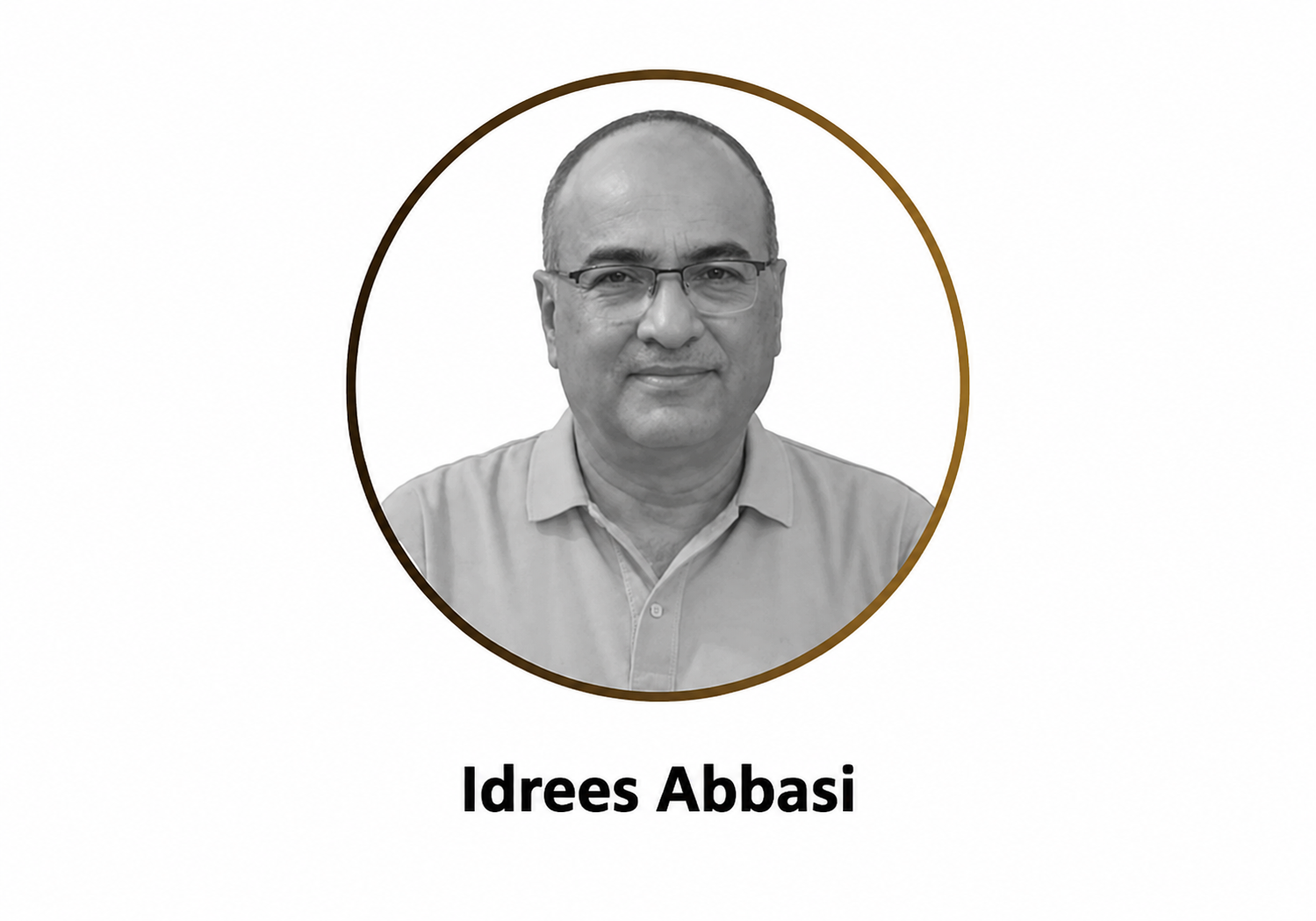
- I still hold hope that my hero and role model, Ahsan Iqbal, will direct Dr.
AI Generated Summary
When I look back across the decades, I realize that some lives are changed not by grand proclamations, but by the quiet, indelible architecture of a single moment. In the spring of 1981, as I stood finishing my high school studies in Islamabad, my eyes were constantly drawn to the soaring, unfinished frame of the sixteen-story Shaheed-e-Millat Secretariat, a concrete titan rising just beyond my doorstep in F-6/1. Transfixed by its towering monolith while completing my matric at FG High School Islamabad, I pressed my father to tell me how a simple mind could design something so grand and enduring. His answer was absolute: to shape the world, you must first become an engineer at the prestigious University of Engineering and Technology (UET) in Lahore. Driven by that singular, relentless conviction, I persisted until my father finally brought me to those historic grounds.
Yet it was not the grand arches of academia that forever altered my destiny that day. Standing amidst the university’s lawns, history etched itself into my memory as we encountered a fierce young student leader holding an audience spellbound with thunderous valour. It was Ahsan Iqbal, then a prominent voice of the Islami Jamiat-e-Talaba, whose impassioned voice resonated so deeply that its echo lingered long after we left. When I formally entered UET Lahore in 1984, that moment remained my touchstone. Around 1987, when the Islami Jamiat-e-Talaba again invited him to speak once more, his rhetoric had matured into a soaring, masterly eloquence, bearing the powerful, historic cadence of Martin Luther King Jr., whose speeches I had watched on television. Fresh from completing his MBA at the Wharton School of the University of Pennsylvania, Ahsan Iqbal became a living legend for me. Right there, after almost 45 years, I chose my lifelong role model.
Though we never met in person, I watched his journey unfold over the years with a wide-eyed boy’s devotion. When he was appointed Deputy Chairman of the Planning Commission of Pakistan with the status of Minister of State in 1996 and launched the historic Pakistan Vision 2010 in 1997, my aspirations touched the sky. Seeing my hero chart a bold roadmap to transform Pakistan into an Asian Economic Tiger affirmed my belief in the transformative power of visionary leadership.
There is a profound, aching tragedy in watching the collapse of such an idol, not because they simply fade away, but because the grand architecture of hope they built in your mind turns out to be made of hollow air.
When the news broke a week ago- that silent, heavy statistic from the World Bank declaring that Pakistan’s poverty rate has surged, leaving the nation to account for 48% of the extremely poor across the Greater Middle East, North Africa, Afghanistan, and Pakistan (MENAAP) region, slipping beneath even the shadow of Afghanistan- it did not merely report an economic reality. It felt like a fracture in the sky. It coincided with the candid admission from Interior Minister Mohsin Naqvi that the country’s system of governance has completely collapsed. For someone who believed in Ahsan Iqbal for four decades, this was not just a policy failure; it was a devastating personal betrayal that leaves me weeping tears of blood.
In the rhythmic, unsparing truth of the human heart, one must ask: What becomes of a vision when its chief architect presides over the systematic crumbling of the very house he swore to build? To look back at the shadow of 1981, the raw concrete of the Shaheed-e-Millat Secretariat in Islamabad, the fiery idealism on the lawns of UET Lahore, the soaring promises of a Wharton-honed intellect, and the grandiose blueprints of Pakistan Vision 2010, Vision 2025, and Uraan Pakistan, is to trace a trajectory that promised prosperity, but delivered a landscape of quiet, systemic desperation. In my judgment, these grand slogans were nothing more than stories of science fiction, crafted meticulously to keep him alive within the corridors of power and to construct a carefully curated myth of how good an economic planner he was.
Let us be completely clear, stripped of euphemisms: this was never about personal corruption or thievery. He was investigated by NAB on corruption charges, but he came out a clean man, and I was proud of him in those moments. The tragedy is far more insidious. Ahsan Iqbal has been, by the evidence of results, a no-show in national planning, an architect of monumental incompetence who mistook endless presentations, glossy slide decks, and superficial press conferences for actual progress. Yet he is an undisputed master at generating tickers for the media. He crafts slick, short TV soundbites, sensationalising to 260 million Pakistanis grandiose promises “to make Pakistan a trillion-dollar economy,” while in reality, the record, as I read it, shows a planner who consistently served his own political agenda.
Look closely at his priorities: securing his political grip and keeping his son’s legislative seat alive in Narowal. Even local institutions, the University of Narowal, bear his heavy hand; he maintains an iron grip over the appointments at the University of Narowal, seeking, in my view, to control it as a personal fiefdom long into retirement.



Comments
0 commentsNo comments yet — be the first.