

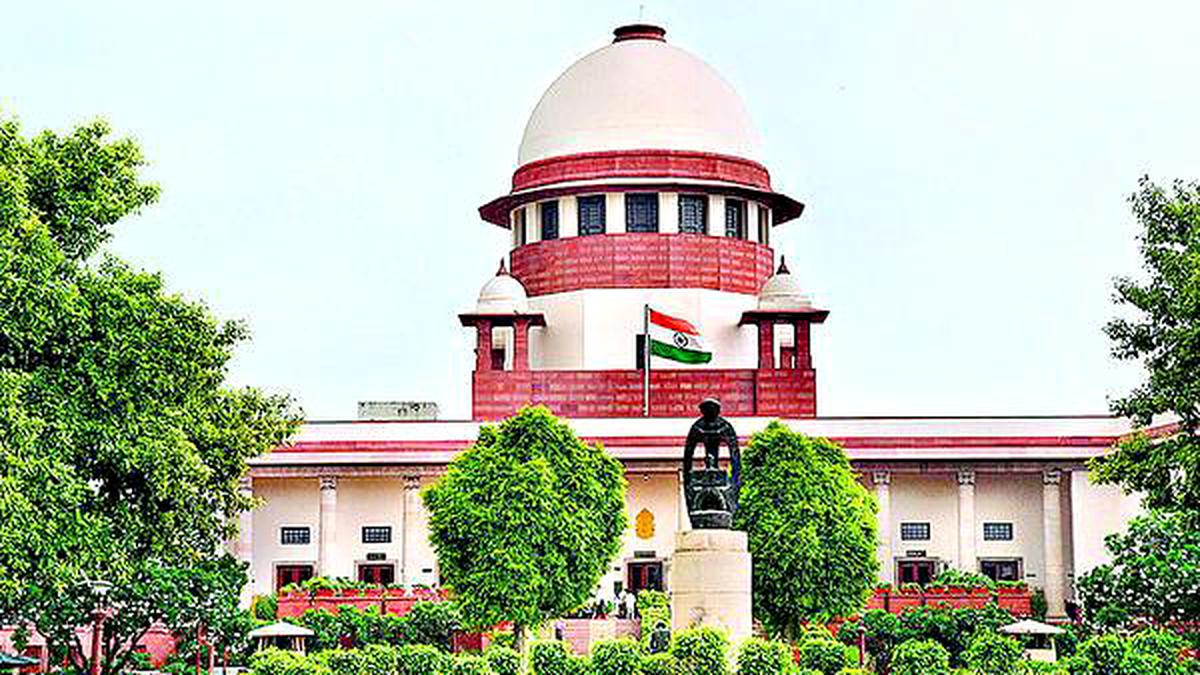
The Supreme Court on Tuesday (October 6, 2026) orally asked whether the "sentiment of the symbol" operates for persons who have committed the "constitutional sin" of defection, as it heard arguments on whether the Election Commission of India was right to rely primarily on legislative strength to allot the symbol to the Shinde faction.
The observation was made by a Bench comprising Chief Justice Surya Kant and Justices Joymalya Bagchi and V. Mohana during the hearing on a batch of pleas arising from the split in Shiv Sena, including challenges to the Election Commission of India’s decision recognising the Eknath Shinde-led faction as the real party and allotting it the bow-and-arrow election symbol.

The Bench was hearing arguments by senior advocate Neeraj Kishan Kaul, appearing for the Shinde faction. Mr. Kaul, referring to various apex court judgments, defended the ECI’s reliance on the legislative majority test, saying that the test remained legally valid and relevant in determining which faction constituted the political party under the Election Symbols (Reservation and Allotment) Order.
Justice Bagchi questioned how the party symbol should operate in a situation where members facing disqualification proceedings subsequently lose their membership.
“The liberty remains with the political party. And what it says is, if disqualified members go away, the remaining members get a different symbol. Now, you were just about to read Sadiq Ali (judgment).
"Will the sentiment of the symbol operate for persons who have committed the constitutional sin, or will it operate for the persons who complained of the constitutional sin?” Justice Bagchi asked.




Comments
0 commentsNo comments yet — be the first.