


The Judicial Council’s latest Supreme Court appointments have sparked dissent over seniority, transparency and inclusiveness, raising questions about whether meritocracy is giving way to discretion
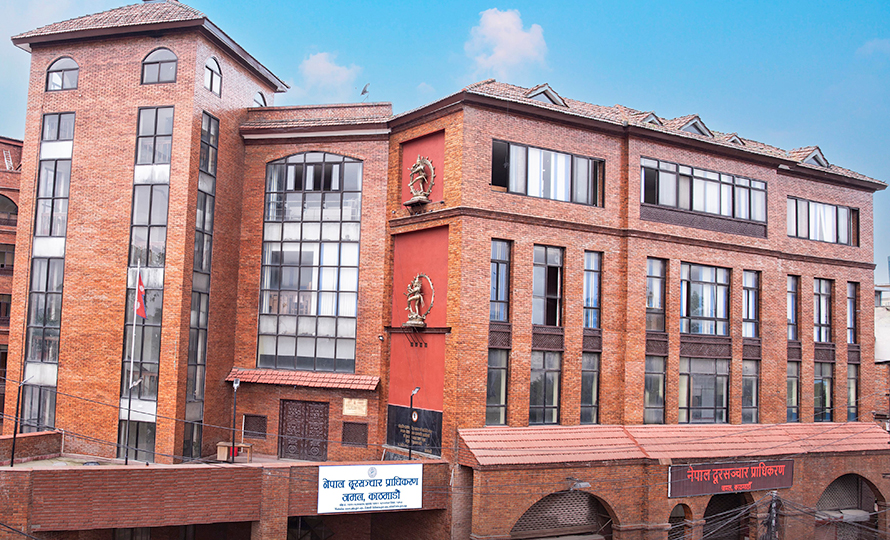
Supreme Court. Photo: Bikram Rai
KATHMANDU: On October 6, the Judicial Council recommended the names of four individuals for appointment to four vacant judge positions in the Supreme Court. The recommendation could not be made unanimously after two members of the five-member Judicial Council expressed dissent regarding the decision.
Following the meeting chaired by Chief Justice and Judicial Council Chairman Manoj Kumar Sharma, where even judges lower in the seniority order were recommended for appointment, questions have been raised about the objective basis of selection.
Both the government and the Chief Justice had made commitments to take judge appointments toward ‘meritocracy’ and a competitive system. However, in the latest recommendation, it has not been made public how qualifications were measured, why those ahead in seniority were left out, and on what objective basis those recommended were deemed qualified.
The Judicial Council has recommended Ratna Bahadur Bagchand, Chief Judge of Pokhara High Court, Chandra Bahadur Saru, Judge of Patan High Court, Janak Pandey, Judge of the Hetauda Bench of Patan High Court, and Gokarna Dangi, Judge of the Temporary Bench of Janakpur High Court in Birgunj, for appointment. These recommended judges are considered ‘career judges.’ However, seniority was not taken as the sole basis for their selection.
The Judicial Council Act, 2016, takes seniority along with experience, subject knowledge, efficiency, honesty, impartiality, professional and moral conduct, reputation earned in public life, and contribution in the field of justice and law as the basis for judge appointments. Additionally, there is a provision that the proportional inclusive principle must also be followed.
Therefore, the question raised in the current recommendation is not only why those ahead in seniority were not recommended, but also on what objective basis others were deemed qualified when leaving them out.
The concern surrounding the current recommendation is not just about why those leading in seniority were excluded, but also about the objective grounds on which others were declared eligible instead.
According to Judicial Council statistics, Bagchand was number one in the seniority order. Chief Judges Rajan Prasad Bhattarai, Lal Bahadur Kunwar, Hari Prasad Bhandari, and Rajeshwar Tiwari, who were behind him, did not make the recommendation. The recommended Saru was ranked fifth, Pandey 13th, and Dangi 16th among the High Court judges. There is a provision that the judges recommended for appointment will be appointed by the President after parliamentary hearings.
Regarding the recommendation, Council member and senior-most Supreme Court judge Sapana Pradhan Malla and another member, Mahesh Kumar Nepal, wrote a ‘Note of Dissent.’ According to Judicial Council sources, judge Malla expressed written disagreement with the recommendation process, stating that seniority was bypassed without proper basis and reasons, the recommendation was not inclusive, and the legal professional sector representing the Nepal Bar Association was ignored. Malla expressed disagreement that the recommendation was made without completing a transparent, objective, inclusive, and credible evaluation process in accordance with the Constitution, the Judicial Council Act, the independent judiciary, and recognized principles of justice. Council member Nepal only expressed disagreement regarding the recommendation of judges Pande and Dangi.
One Supreme Court judge has viewed the recommendation as a sign that political influence is beginning to increase in the judiciary. One Supreme Court judge says, “The judiciary is the place to examine the actions of the state and the government. It appears that a two-thirds influence is beginning to fall there.”
The Nepal Bar Association, the umbrella organization of legal professionals, has also disagreed with the judge appointment recommendation. In a statement issued by Nepal Bar General Secretary Kedar Prasad Koirala on October 7, it is claimed that the objective basis and transparency were lacking in the judge appointment recommendation made by the Judicial Council.

The Judicial Council’s recommendation for judicial appointments to the Supreme Court
The Bar has accused that criteria such as seniority, experience, efficiency, honesty, impartiality, and professional and moral conduct specified by the Judicial Council Act were ignored. The Bar also expressed dissatisfaction that the legal professional group eligible to be judges under Article 129, Sub-section 5 of the Constitution, was ignored. Additionally, it claimed that the inclusive principle could not be embraced in the appointment under Article 42, Sub-section 1.
Through national conferences and central and advisory committee meetings, the Nepal Bar has repeatedly made a strong demand to the Judicial Council to ensure respectful representation of legal professionals in judge appointments. The Bar has also called for moving forward with the purification and strengthening of the judiciary to protect the independence and impartiality of the judiciary and enhance public trust.
On May 19, in the Parliamentary Hearing Committee, Chief Justice Sharma had made a commitment to make the judge appointment recommendation by the Judicial Council based on the merit system (meritocracy) in an objectively visible manner, fulfilling the criteria specified by the constitution and law.
Sharma’s action plan mentions, ‘Identifying and developing objective bases for measuring qualifications, capacity, experience, and judicial integrity according to the constitution and law, and maintaining a system to make appointments controversy-free, transparent, and predictable accordingly.’ However, criticism has been raised stating that those bases were not publicly clear in the latest recommendation.
Via national conventions and central and advisory committee sessions, the Nepal Bar has persistently demanded that the Judicial Council ensure respectable representation for lawyers in the appointment of judges.
Earlier, the Judicial Council meeting held on September 15 had recommended three judges to the High Court. Among them was Himlal Belbase, a judge of Kaski District Court. Following the Council’s recommendation, he was appointed as a judge of the Janakpur High Court. However, within four days of being appointed (on September 20), he went into mandatory retirement due to the 63-year age limit.
Prior to that, Belbase had allowed the amendment of the charge in the organized crime and money laundering case of Rastriya Swatantra Party (RSP) Chairman Rabi Lamichhane. Criticism was raised over the matter of him being recommended to the High Court when his service period was about to end. A Supreme Court judge has expressed suspicion that Belbase might have been recommended to the High Court in return for allowing the amendment of the charge in Lamichhane’s case. He says, “What will happen if appointments begin to be given for four days as a reward in a manner that is convenient to oneself?” He stated that the increasing criticism of the judiciary is not a good sign.





Comments
0 commentsNo comments yet — be the first.