


From BP Koirala’s democratic socialism to today's quiet compromise on core values, the country’s oldest party meets in Kathmandu with no settled principles for a changing electorate
The Nepali Congress kicks off its 15th General Convention at Khulamanch—the historic grounds where party founder BP Koirala addressed the nation after returning from exile. Photo: RSS
KATHMANDU: At 2 p.m. today, the Nepali Congress returned to its historic roots to kick off its first regular general convention in nearly five years—gathering on the same stage where BP Koirala first addressed the nation after returning from exile. Yet, the party enters this milestone meeting at its lowest political ebb: haunted by youth-led protests, fractured by internal legal battles and stripped of more than half its House seats.
The convention will matter in three practical ways. It will test whether Gagan Thapa can turn legal recognition into organisational authority. It will show how many of Sher Bahadur Deuba’s former allies are ready to move on. And it will set the party’s footing for a legal contest that is still open, because the Supreme Court has not finished reviewing its own ruling.
None of this answers the question voters put on March 5. They did not ask who controls the party office in Sanepa. They asked what the party is for. The Congress won about 1.75 million proportional votes, down from 2.72 million in 2022, and the months since have gone largely to procedure.
That is the real subject of this week. The convention is large, well organised and legally contested. It is also likely to be uncontested where it counts. Thapa is the front-runner for president, and several party leaders already call him the only candidate. An election with no rival is efficient. It is not a debate, and the party needs a debate more than it needs efficiency.

Supporters of the Nepali Congress gather at Khulamanch, Kathmandu, for the opening of the party’s 15th General Convention on Sunday. Photo: NC Media
There is a genuine story about generational change here, and it deserves credit. The January convention wrote youth quotas into the statute, including at least 21 central committee seats for people under 35. Young delegates are arriving in numbers the party has not seen before. Thapa says nothing will change for Gen Z until it has a substantial presence inside the party. He is right that faces matter. But young people do not join a party for its quota. They join for an argument they believe in. On that front the Congress has yet to offer one.
The stakes also reach past the party. The Congress is the main opposition in a House where the RSP holds 182 of 275 seats. A weak, inward-looking opposition leaves that government with little check.
A crisis of purpose dressed as a feud
Look back over the past year and the feud reads less like a cause than a symptom. The fight over the convention was a fight over who would hold the party. Both sides quoted the statute. Both sides found officials and judges to quote. Neither side produced a document explaining what the Congress would do differently in power or in opposition.
The sequence is well known. Deuba handed the acting presidency to Purna Bahadur Khadka last October. A group led by Thapa and Bishwa Prakash Sharma collected signatures from 54.58 percent of delegates. The special convention elected Thapa in January. The Election Commission recognised him, and the Supreme Court did the same in April. In August the court agreed to review that ruling. Every stage turned on quorum, signatures and legitimacy. None turned on belief.

Gagan Thapa at the Election Commission on January 15, 2026, to update Nepali Congress records following the Special General Convention. File photo
March 5 was the bill for that period. The Congress took roughly one in ten proportional votes. The RSP won 182 seats. The Congress had shared power in the government that fell to the Gen Z protests, and it went into the election seven weeks after its own split. Voters judged the party by the version they could see, and they did not like it.
The homecoming of senior leaders tells the same story. About 70 central committee members who skipped January have since joined Thapa. Of the 164 members of Deuba’s old committee, only about 31 are said to remain with him. Khadka and Shekhar Koirala have stayed away from both conventions. These moves came after the commission and the court had spoken, and after Thapa agreed to adjust the committees. They show how leaders read the balance of power. They do not show agreement on what the party believes. The returnees hold different views on socialism, on secularism and on the market. They now share one stage and one slogan about unity.
Deuba’s side is no more principled. After losing control, his faction used its August gathering to adopt a last-minute declaration promoting Sanatan Dharma as national identity, over the objections of senior figures including Bimalendra Nidhi. Analysts read it as an attempt to build a separate identity after losing the party. A faction that finds its ideology after it loses its office has not really found an ideology. Both camps have fought over the same object, and neither has said what it would do with it.
The leader who inherited a problem he helped shape
Gagan Thapa deserves a fair hearing. He became president on January 14 with an election seven weeks away. He inherited a divided organisation, a rival camp that refused to recognise him and nomination papers that needed his signature within days. Few leaders would have won from that position. After the defeat he offered to resign, and the central committee refused. Since then he has made real concessions. He adjusted the committees, suspended a statute provision on membership renewals and invited Deuba to open the convention. In September 2025, he and Sharma, then general secretaries, publicly urged Prime Minister Oli to quit as the protests peaked. That showed an instinct for the public mood.
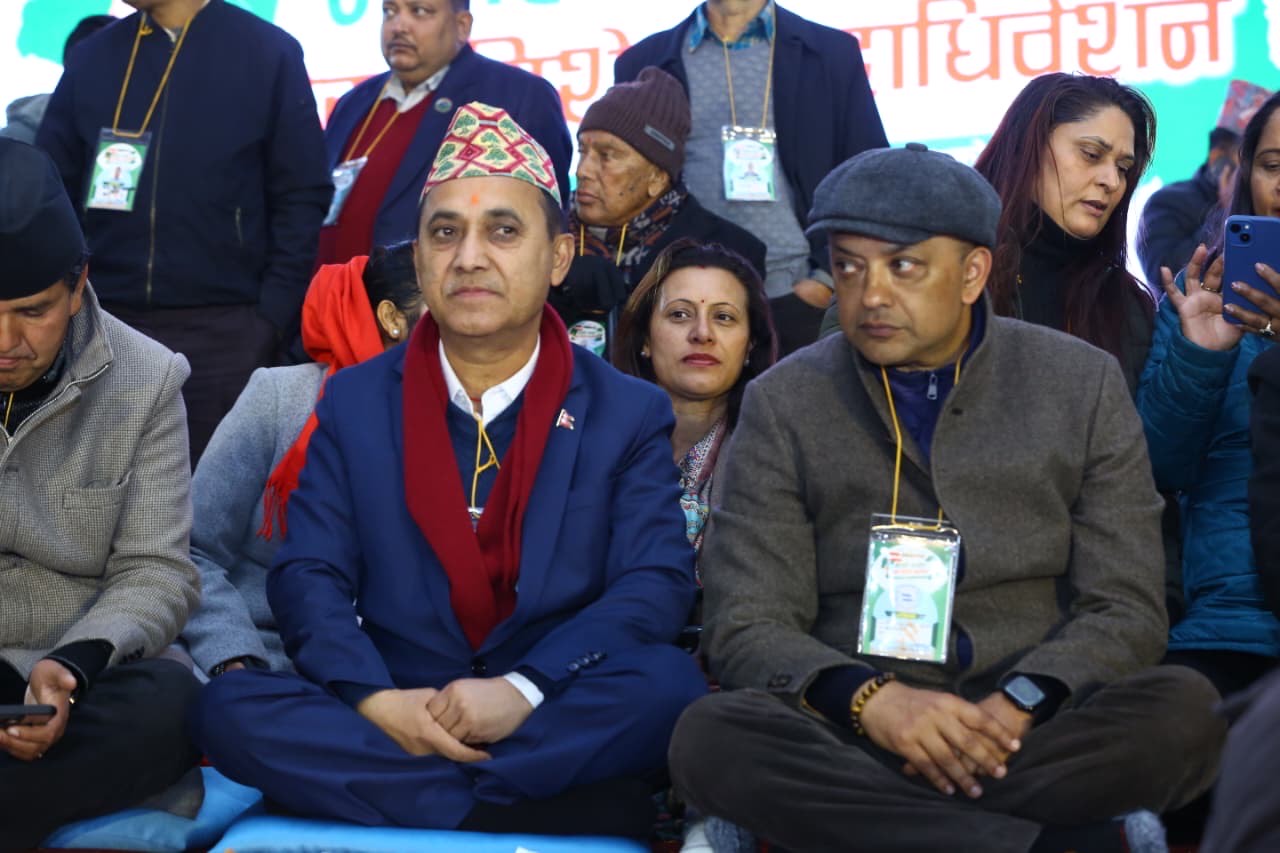
Gagan Thapa (right) and Bishwo Prakash Sharma at the NC special general convention. File photo: Nepal Photo Library.




Comments
0 commentsNo comments yet — be the first.