

Disruptions to all three major trade routes with China ahead of Dashain and Tihar have severely impacted imports targeted for the festive season, following extensive damage to the Rasuwagadhi border crossing from the floods on August 26.
KATHMANDU: Imports of goods from China have been severely affected after the flash flood on August 26 destroyed the Rasuwagadhi border crossing, which serves as a short route to Kathmandu. Citing disaster risks, the Chinese government had already closed the nearby Tatopani border crossing. Although imports were initiated through the Korala border crossing in Mustang as an alternative to both, continuous rainfall, landslides, and snowfall after September 24 blocked the road, creating further complications. With all three primary commercial border crossings with China affected on the eve of Dashain and Tihar, the import of festival-targeted goods has been hit hard.
The complete closure of these border points raises the risk of reduced market supplies and surging inflation. “With no route available for imports, the primary issue lies in the supply chain itself,” says Ramhari Karki, President of the Nepal Trans Himalaya Border Commerce Association. “Goods won’t be available, and inflation looks set to rise even further.”
According to Ang Dorjee Sherpa, Secretary of the Commerce Association, clothing and apparel form a major portion of the goods consumers buy heavily during Dashain and Tihar. He noted that halted imports will make it difficult to bring such items to the market. He added that the failure to import goods in a timely manner leaves consumers without supplies and creates a situation where prices escalate.

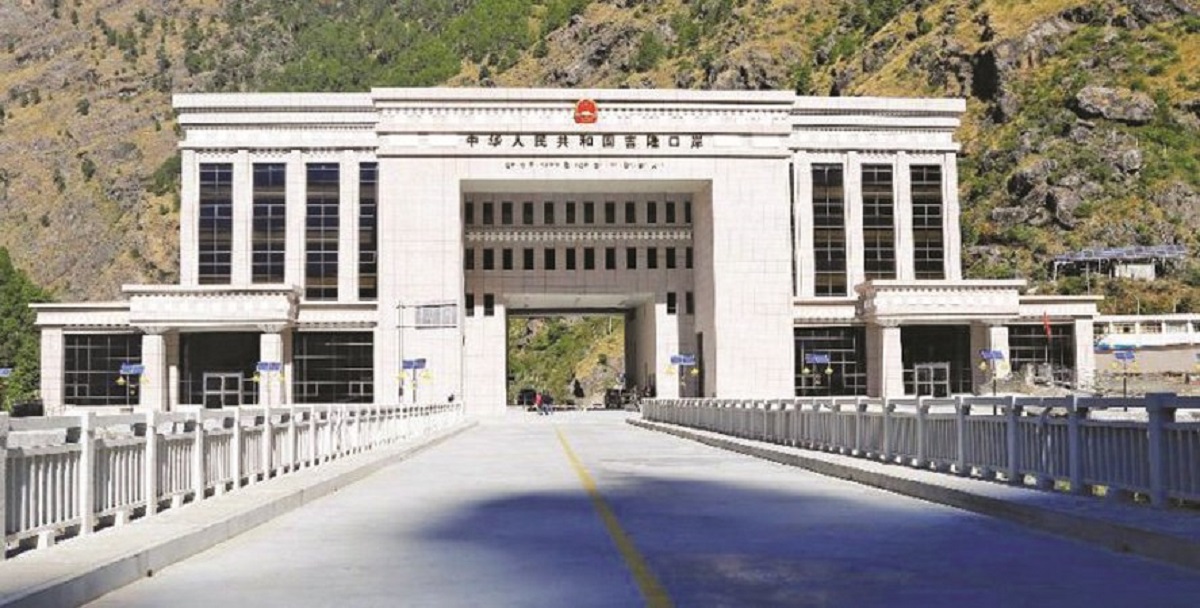
Kerung border point before being damaged by the Bhote Koshi flood. File Photo
Traders who took bank loans to import Dashain-Tihar goods from China are deeply concerned about being unable to bring in and sell their inventory in time. Nepal imports a wide range of products from China, ranging from textile raw materials to ready-made garments, footwear, bags, electrical appliances, and vehicles. Fresh produce such as apples, mangoes, walnuts, and garlic are also imported from China.
According to data from the Department of Customs, Nepal imported goods worth over Rs 76.40 billion rupees from China in the first two months of the current fiscal year 2026/27. Imports suffered after roads and bridges leading to all three major border points sustained severe damage.
Rasuwa damage drives up freight costs
Traders report that transportation expenses have surged for goods diverted through Korala and Kolkata following the events in Rasuwa. Sherpa stated that drivers, laborers, and traders involved in transit went missing along with containers and cargo after being caught in the flood.
He mentioned that around 450 loaded containers were lost in the Rasuwa flood, resulting in damage to goods worth approximately Rs 3.5 billion rupees. He added that reopening the Tatopani border point would bring immense relief to the business community. “We hear efforts are underway to reopen Tatopani; if the Chinese government responds positively, it would provide great relief,” says Sherpa. “It is fast, short, and simple, and plenty of vehicles are available for transport.”

Kerung border point damaged by floods. File Photo
Diplomatic initiatives to reopen Tatopani
The government stated that it has initiated diplomatic efforts to reopen the nearby Tatopani border crossing for immediate relief. Jitendra Basnet, Joint Secretary and Spokesperson for the Ministry of Industry, Commerce and Supplies, stated that with commercial border points with China disrupted, efforts are being pursued through the Ministry of Foreign Affairs.
On September 28, following a proposal from the Chinese side, an inspection team led by Ram Kaji Khadka, Joint Secretary at the Ministry of Foreign Affairs—along with officials from the Chinese Embassy in Nepal, the Department of Customs, and the Department of Roads—conducted an on-site assessment of the Tatopani road section in Sindhupalchok.





Comments
0 commentsNo comments yet — be the first.