

Summary
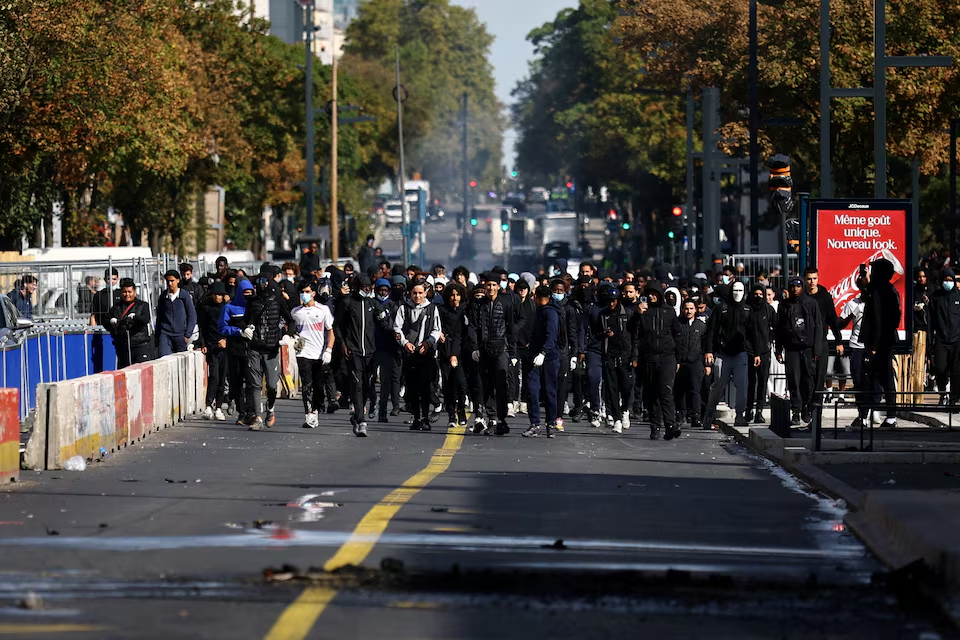
- A protest movement that began among high school students in Paris’s poorer suburbs has grown into the largest nationwide mobilization over school funding France has seen since the 1990s, with demonstrations now sweeping more than 1,200 high schools and spreading into universities across the country.
- At Lycee Le Corbusier in the suburb of Aubervilliers, 17 year old Maisa, who hopes to become an English teacher, said she sat her high school French exam last year without ever having a French teacher.
- Clemence Cardon-Quint, a professor at Paul Valery University who studies education funding, said the last nationwide high school protest movement of this size demanding more resources occurred in the 1990s, following a period when the government sharply expanded access to the baccalaureat, the school leaving exam that opens the door to university, without providing schools the additional funding needed to support that wider access.
AI Generated Summary
A protest movement that began among high school students in Paris’s poorer suburbs has grown into the largest nationwide mobilization over school funding France has seen since the 1990s, with demonstrations now sweeping more than 1,200 high schools and spreading into universities across the country.
The unrest took root in Seine-Saint-Denis, a department north of Paris with some of the highest poverty levels in the country, before spreading to Paris itself and onward to cities including Marseille, Strasbourg, Tours, Lille and Brest. At Lycee Le Corbusier in the suburb of Aubervilliers, 17 year old Maisa, who hopes to become an English teacher, said she sat her high school French exam last year without ever having a French teacher. “These are not conditions to study in,” she said. Fifteen year old Amelia, protesting alongside her, carried a sign reading “Our address should not decide our future,” and accused education authorities of failing to invest adequately in the suburbs, calling the disparity both classist and racist.







Comments
0 commentsNo comments yet — be the first.