

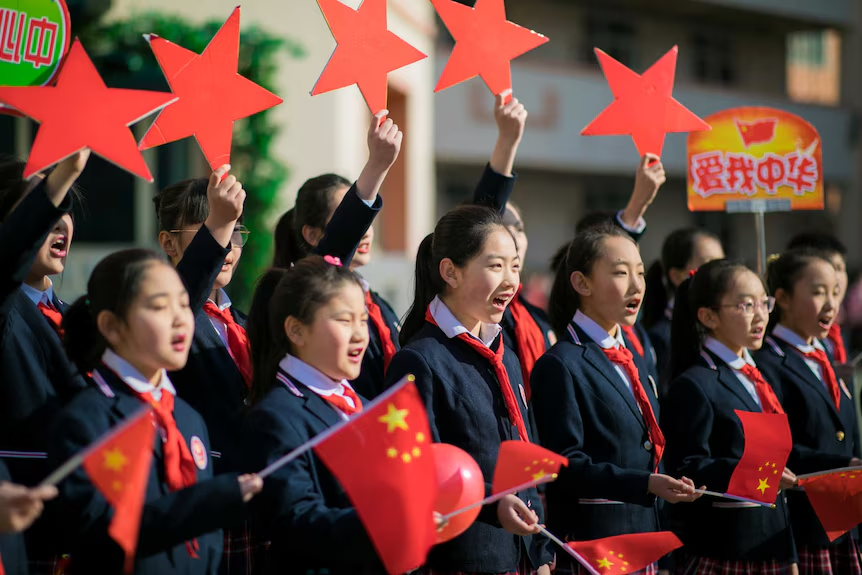
China’s education system is undergoing a broad political transformation, with the Chinese Communist Party (CCP) tightening its influence over curricula, textbooks, teaching methods and even the allocation of students to classes.
The changes are visible in an unlikely place: English-language textbooks.
China has revised English textbooks for primary and middle-school students, with the new material being rolled out nationally from the autumn 2026 semester. References to foreign culture, including London landmarks such as Tower Bridge and Big Ben, as well as Halloween, have been replaced by material on Qing Dynasty thinker Liang Qichao, the Dragon Boat Festival and China’s overseas aid programmes.
The stated objective is to enable students to “tell China’s stories effectively” and strengthen patriotic sentiment. Chinese education authorities have also argued that earlier textbooks lacked sufficient material on “revolutionary culture and advanced socialist culture.”
The significance goes beyond textbook editing. A subject traditionally intended to expose students to foreign languages and cultures is increasingly being used to reinforce themes of socialism, revolution and patriotism.
This is part of a wider restructuring of education policy that has accelerated since 2020, bringing political and ideological requirements into virtually every level and subject of China’s education system.
Education as “Party work”
The political character of the system was underscored at the National Basic Education Work Conference in Beijing in July, following the publication by Chinese state media of Xi Jinping’s instructions on basic education.
In CCP institutional terminology, “work” is not simply an administrative description. “United front work”, “propaganda work”, “ideological work” and “education work” refer to organised Party mechanisms through which policy is formulated and implemented.
At the July conference, Xi called on educators to “persistently use the Party’s innovative theory to shape and educate.” Vice Premier Ding Xuexiang similarly stressed the role of Xi Jinping Thought and described education in explicitly political, social and strategic terms.





Comments
0 commentsNo comments yet — be the first.