


The Federal Civil Service Bill, registered on October 1, proposes a retirement age of 60, a one-time exit for staff aged 55 or with 30 years of service, a 30-year pension cap, a 49 percent inclusive quota and a legal frame for provincial and local services
Minister for Federal Affairs and General Administration Pratibha Rawal registered the Federal Civil service Bill in Parliament on October 1.
KATHMANDU: The government registered the Federal Civil Service Bill in the House of Representatives on Thursday, October 1, 2026. Minister Pratibha Rawal of the Land Management, Cooperatives, Federal Affairs and General Administration Ministry filed it as Bill No. 35.
It would replace the Civil Service Act, 1993 and give the bureaucracy a legal base across three tiers of government. This is the third attempt, after bills in 2019 and 2024 failed to become law. The winter session is the earliest chance to move it forward.
What is the Federal Civil Service Bill, and what stage has it reached?
It is a government bill meant to amend and merge the laws that cover the federal civil service. Minister Rawal registered it on October 1, a day before the House session was due to close. The cabinet had cleared it for submission on September 29, and it carries registration number 35.
Once enacted, it would repeal the Civil Service Act, 1993, which still governs hiring, service conditions, transfers, promotions and retirement. The government says the new law will make the bureaucracy more professional, capable and accountable, and less exposed to political influence.
Registration only opens the formal process. A bill can be presented seven days after it is registered, and the current session is ending, so lawmakers cannot take it up before the winter session. It must then pass the House of Representatives and the National Assembly before it can become law.
Why has it taken more than ten years to reach Parliament?
Nepal’s constitution took effect in 2015, yet the civil service still runs on a law written for a unitary state. Provincial governments kept asking for a federal law, because they could not build their own cadres without one. The gap slowed administrative restructuring at the provincial and local levels.
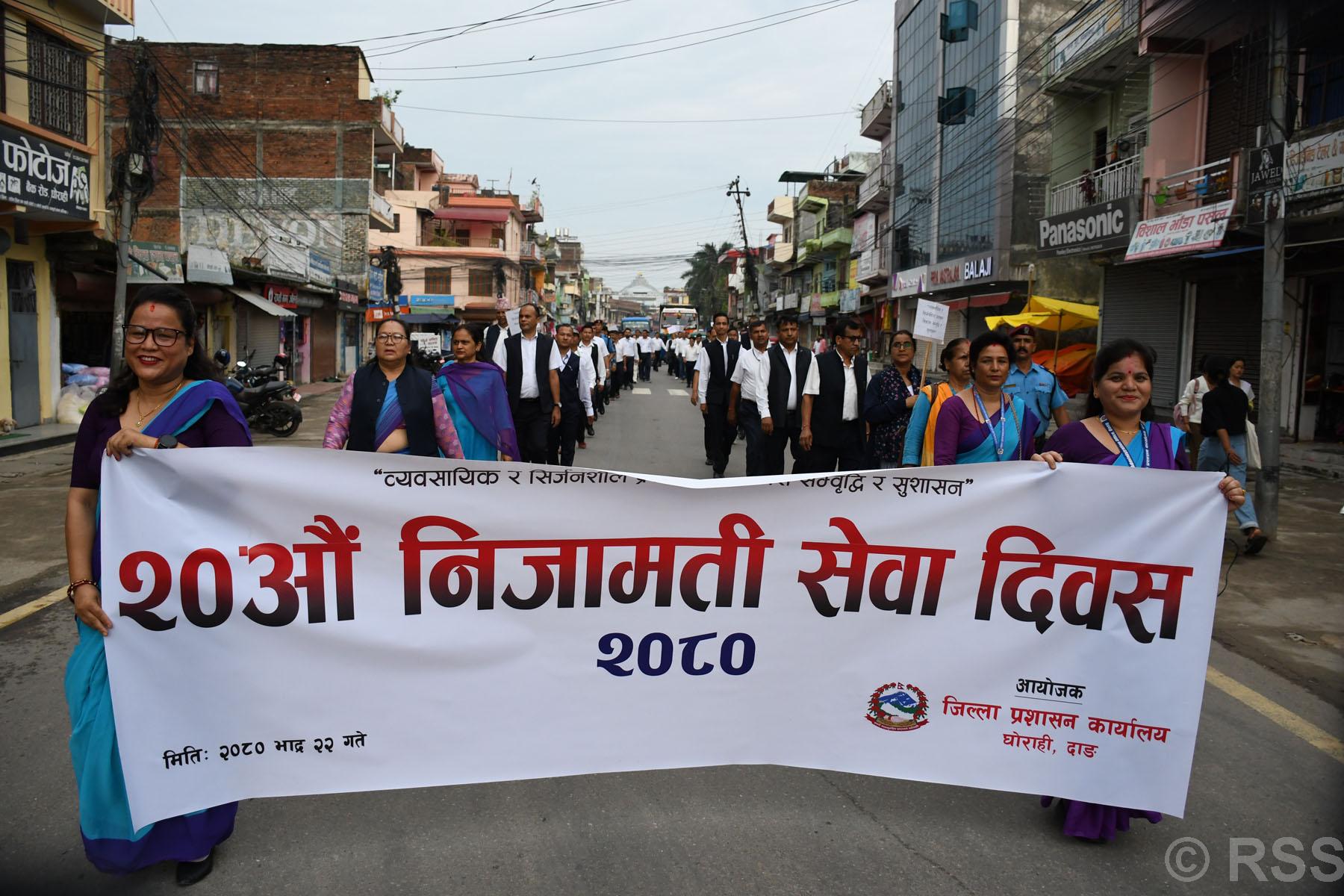
Government employees participate in a rally to mark the 20th Civil Service Day in Dang in 2023. File photo.
The first bill was registered in February 2019 and stalled. A second was registered in early 2024 and passed the House in June 2025, after a House committee had added new provisions. The National Assembly returned it with amendments, partly to fix a mismatch over the cooling-off clause. The House was dissolved in September 2025 before it could settle the changes, and the bill lapsed. Experts blamed political interests and pressure groups for the earlier failures.
This third bill absorbs many points that House committees agreed on earlier. They include the inclusion percentages, the formation of services and groups, and coordination among the three tiers. The government formed on March 27, 2026 had promised a draft within 45 days. The bill arrived after about six months.
What are the main provisions at a glance?
On retirement and pensions, the bill sets a normal retirement age of 60. It adds a one-time exit for serving staff who have reached 55 or completed 30 years. It also caps pension calculation at 30 years of service. Voluntary retirement is allowed at 55 or after 30 years, with extra service credited. The chief secretary would serve two years and secretaries three.

Ministry of Federal Affairs and General Administration. File photo
On structure and recruitment, the old class system becomes 14 levels, from assistant first level to officer level 14. There would be 11 services grouped into six clusters. Inclusive recruitment would cover 49 percent of open-competition posts. Outside experts could be hired into executive roles for fixed periods.
Other provisions include a two-year cooling-off period for senior officers, a conflict-of-interest rule, annual performance agreements and a Civil Service Board. There are also education and health insurance, cheap housing loans, menstrual leave, and a framework for provincial and local services. The bill makes no provision for trade unions.
How is the bill different from the existing law?
The 1993 Act has no framework for provincial or local civil services, because it predates federalism. The bill adds one. Retirement moves from 58 to 60 for those who stay. Pension today counts every year served, while the bill counts at most 30. Chief secretaries serve three years now and secretaries five. The bill cuts those terms to two and three years.
Recruitment changes too. Inclusive seats rise from 45 percent to 49 percent of open-competition posts, and the quota is reorganised so half of it is for women only. The class system is replaced by levels. New appointees would join a contributory pension scheme. A cooling-off period, performance agreements and a Civil Service Board are new features.
Some rules stay as they are. Entry ages remain 18 for non-gazetted posts and 21 for gazetted ones, with the upper limit under 35 for men and under 40 for women. The bill is silent on civil service trade unions. Conflict of interest, by contrast, is set out in detail in law for the first time.
What is the new retirement age, and who does it apply to?
Under section 57, mandatory retirement would rise from 58 to 60. The current age comes from section 33 of the existing Act. Anyone appointed after the law starts would retire at 60. So would current employees who are not caught by the transitional rule.

Officers in the special class follow a different test. The chief secretary at level 14 and secretaries at level 13 would leave when their fixed term ends or when they reach the retirement age, whichever comes first. A secretary who is 58 on the day of appointment would therefore serve a shorter term than three years.
For serving staff, the bill adds a separate one-time provision tied to age 55 and 30 years of service. That rule is the most contentious part of the bill, and the next question covers it. In practice, 60 becomes the working retirement age only for future recruits and for the current staff who remain after the transition.




Comments
0 commentsNo comments yet — be the first.