

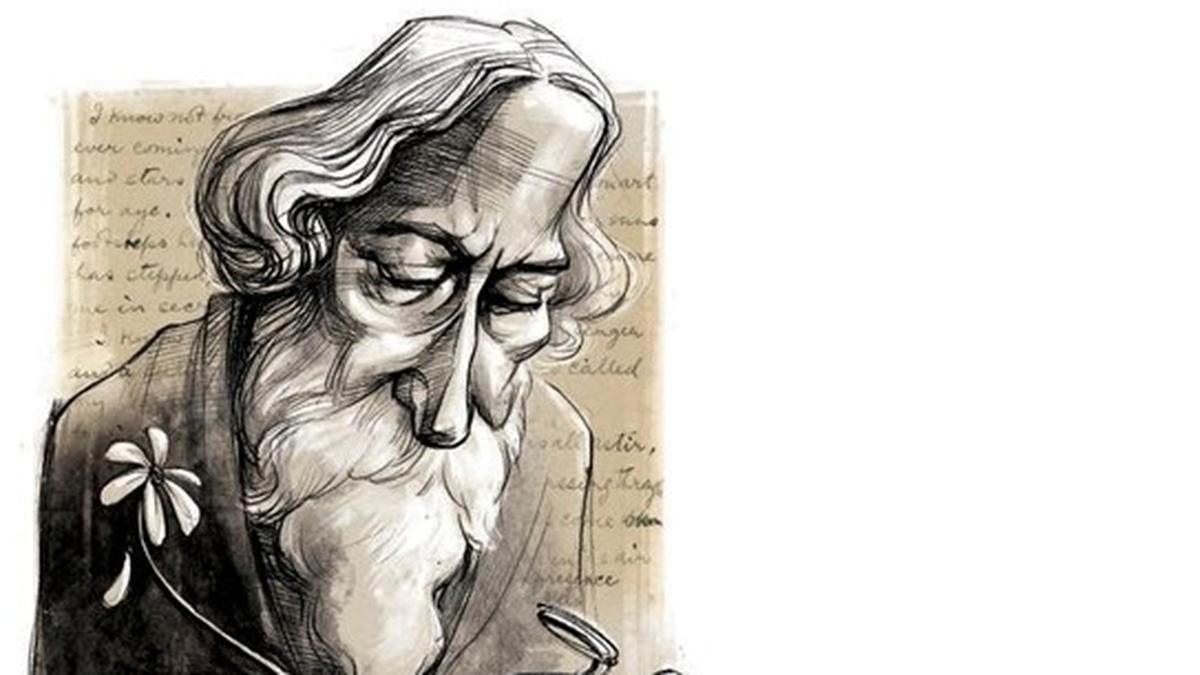
Addressing a tutorial on the English romantics, a professor concluded: “Read Tagore, I implore you, to understand how unlike poets such as Shelley and Keats, he did not struggle to reconcile imagination and reality. This tip stayed with those students of Jadavpur University, one of whom I borrow the anecdote from to embark on this eminently rewarding but daunting endeavour to celebrate the poet-laureate’s musical oeuvre on his 165th birth anniversary, which was celebrated last week.
Bengalis raised in Kolkata will readily profess how Rabindranath Tagore has been central to their formative years. He has been omnipresent in school texts, music on the radio and records at home, not to forget the compulsive desire in each of us to sing, recite and enact his offerings with aplomb — often without concern for glaring individual limitations of craft and performance.
One of my earliest memories of Rabindra Sangeet is Hemanta Mukhopadhyay’s rendition of ‘Ogo nodi apon bege’, a song of the river as a willing chronicler of life’s many turns across meadows and landscapes. Later on, songs of ‘Chandalika’, the dance-drama about love pitted against social ostracism, would play on loop, gradually leading to timeless anthems such as ‘Dhono dhannay’, ‘More bina uthe kon shure baje’ in school and college. These experiences are by no means exclusive. If anything, they are stereotypically ‘Bangalee’. Yet, these have been essential, a rite of passage that paves the way towards serious cultural and intellectual exploration of Tagore songs. For the invested music lover, it is a work in progress that opens doors, at times a whole new horizon, at each hearing.




Comments
0 commentsNo comments yet — be the first.