

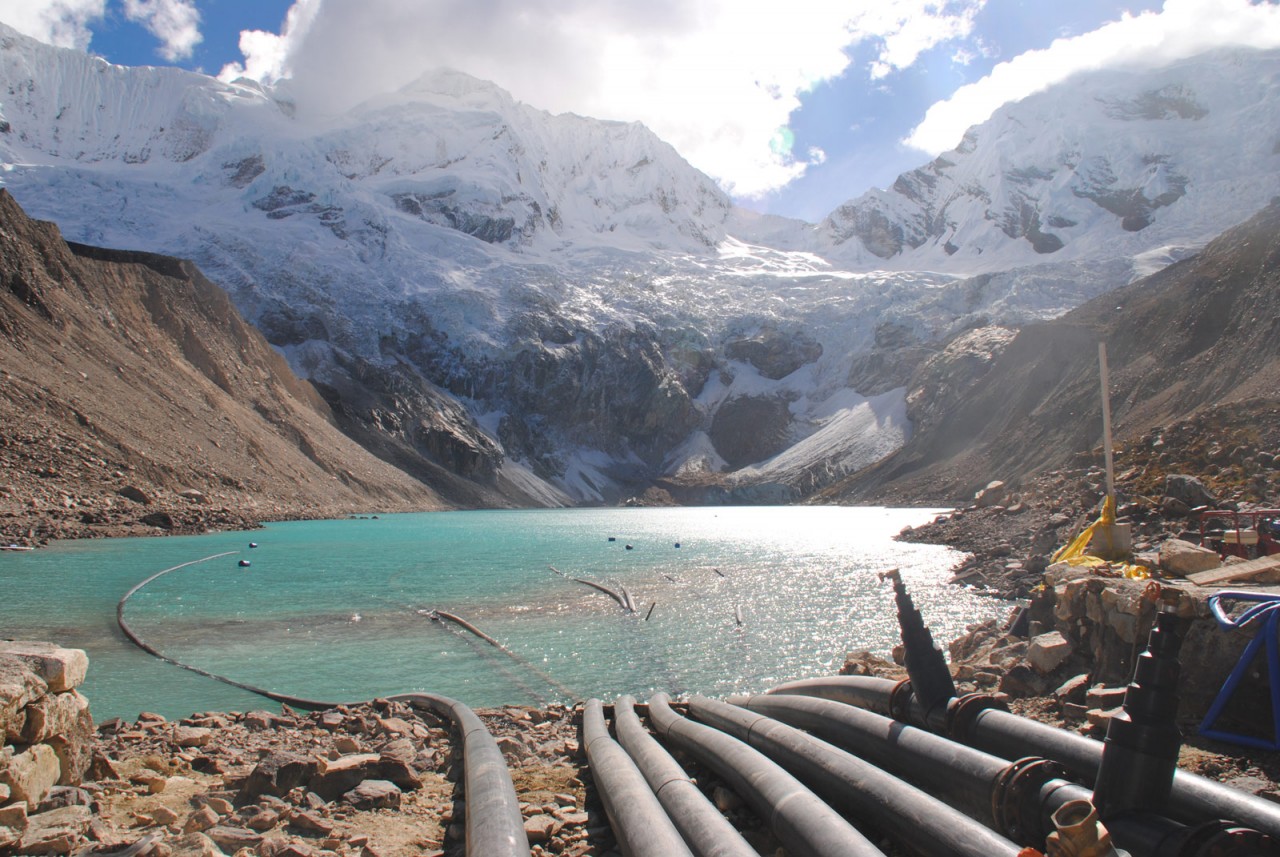
The Trisuli Valley flood on 26 August has led to a renewed sense of urgency in addressing Glacial Lake Outburst Flood (GLOF) risk in the Himalaya. While there were geological forces at play in the Langtang Lirung slope collapse, glacial lakes similarly present a looming danger exacerbated by rising global temperatures.
On the other side of the planet, Peruvian communities have been coping with GLOFs since the 1940s. The history of glacial risk reduction in the Andes reveals lessons about what works and what does not.
The first and perhaps most important lesson from the Andes is the importance of consistent funding and public oversight when it comes to glacial risk reduction.
In 1941, a GLOF from Lake Palcacocha in Peru’s Cordillera Blanca mountain range killed thousands of people in the city of Huaraz and motivated the Peruvian government to study and control glacial lakes. Over the years, public hydropower companies supported that work, recognising its importance to their industry.
In 1970, a debris avalanche and mudflow off Mt Huascaran, similar to what happened in Nepal last month, was triggered by an offshore earthquake and destroyed the Peruvian town of Yungay, killing 30,000 people – the deadliest glacier-related disaster in history.
By the 1990s, Peru had completed a survey of glacial lakes in the Cordilla Blanca, identified which ones were hazardous, and intervened at 34 of them. Researchers and engineers developed a suite of strategies to manage lakes, from simple channels and earthen dams to complex valve systems.
However, neoliberal reforms beginning some 25 years ago led to the dissolution of state-run agencies and the privatisation of hydropower in Peru. Projects were underfunded and stalled even while global warming exacerbated the risks posed by glacial lakes in the Andes. In 2024, Lake Palcacocha flooded Huaraz for the first time in more than 80 years.
Even as Peru’s policy infrastructure for reducing GLOF risks began to decline, scientists found ways to exchange knowledge – including through a series of three USAID-funded workshops in Nepal and Peru hosted by Alton Byers, a mountain geographer at the University of Colorado Boulder.






Comments
0 commentsNo comments yet — be the first.