

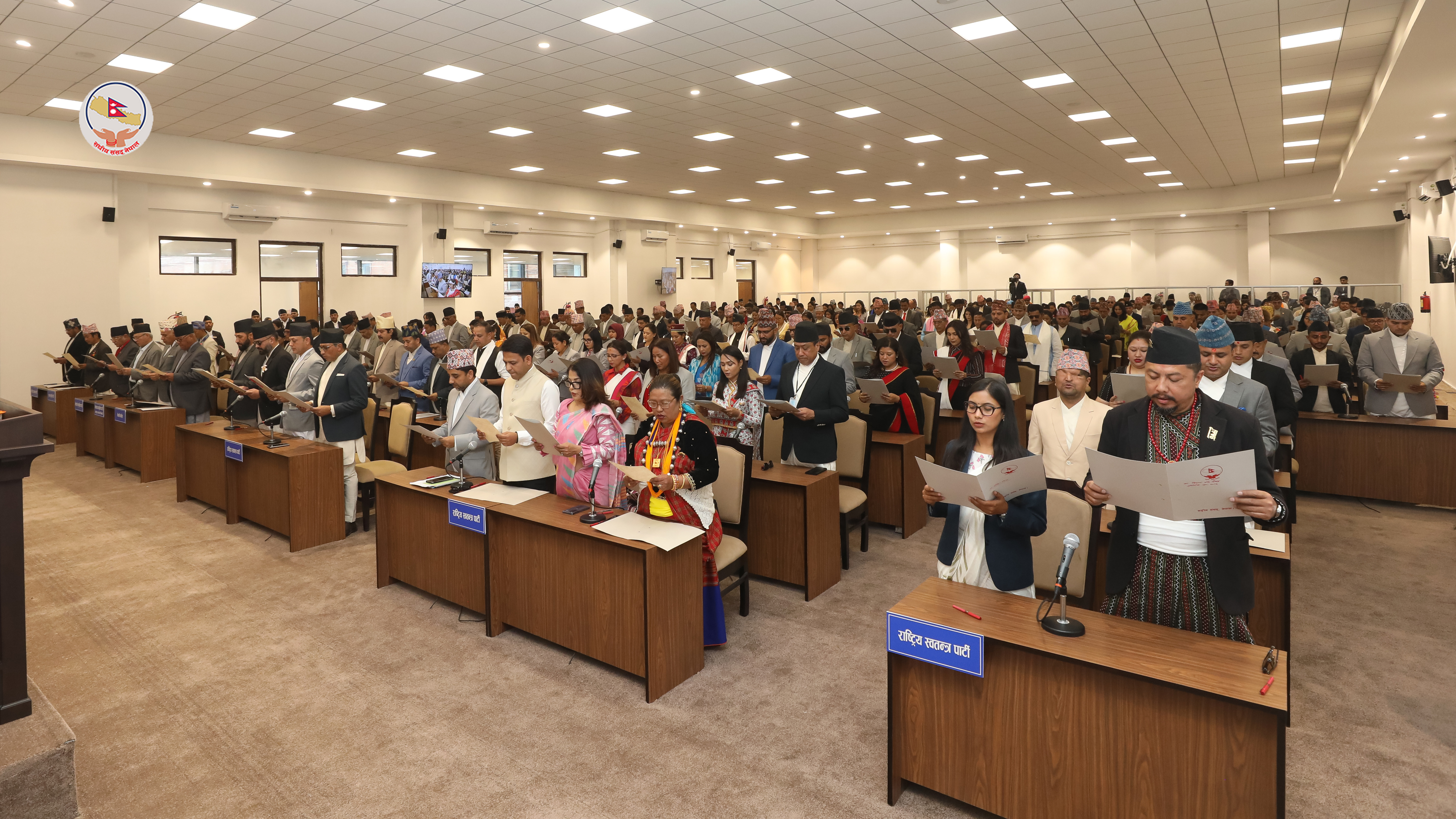
Something keeps coming back to me as I watch from afar Nepal’s new Young Turks in government.
Whatever the slips here and there — and whether open competition makes sense as a blanket mechanism for appointments like ambassadors — something rather consequential is being attempted.
Nepal’s political parties and government have long operated mostly through a ‘relational system’: who knows whom, who belongs to whose network, who owes whom. It is one of the ways the extractive politics of the past 30 years, and for many decades prior to that, worked.
The repeated push toward open competition for vice chancellorships and many other positions are almost an act of constructive destruction — an attempt to dismantle that relational system, popularly known as the politics of भागबन्डा, and gradually replace it with a more impersonal governing system, where rules and procedures matter more than personal access.
Ambassadorial appointments provide the latest experiment. More than 4,400 people applied after the government opened the positions to public applications, with 13 nominees emerging from the first round of selections.
Open competition is not magic. Nor am I convinced it is the right mechanism for every appointment. I offer a mixed hybrid method in my Nepal Unplugged essay.
Essentially, diplomacy requires judgment, experience, political understanding and interpersonal skills that cannot easily be captured by an application form. An open advertisement can also lead to a closed selection process if what happens afterward is less transparent.
But that is almost secondary. These young leaders may not always get the mechanism right. They are young, educated and energetic, but relatively inexperienced in the unforgiving business of governing.
Still, they deserve credit for daring to take on something much deeper than individual appointments: a governing habit built over generations. That may ultimately be more consequential than who wins any particular vacancy.
But daring to dismantle an old system and learning how to govern are two different things. They have done the first, but the latter is yet to be seen.
The recent 3% levies on private education and health offer an interesting example. The education levy and argued that its underlying equity principle was defensible, even if the instrument was problematic. The government introduced it, encountered strong public resistance, and quickly withdrew it.









Comments
0 commentsNo comments yet — be the first.