

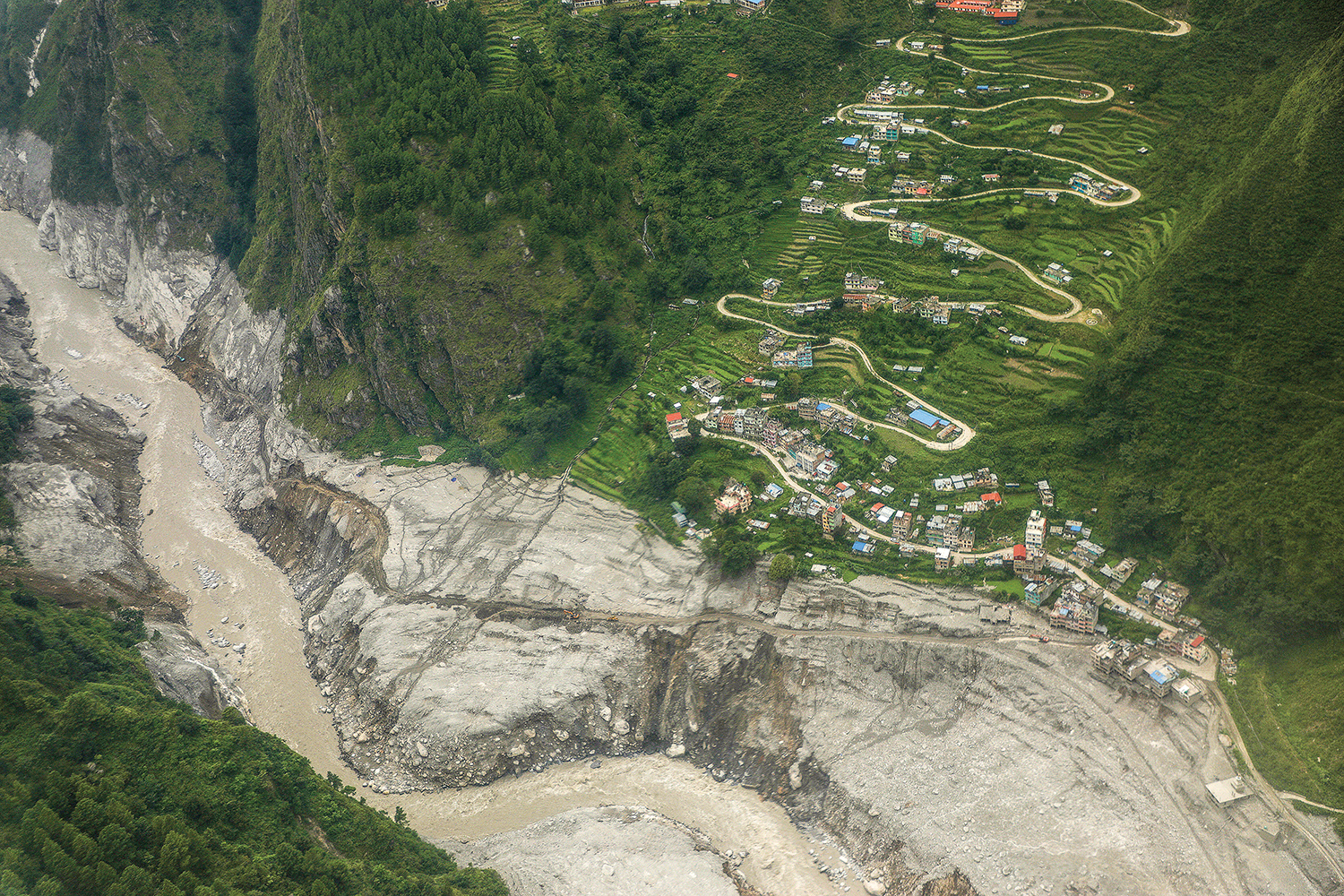
Total death toll of the Trishuli Valley flood is likely to surpass 7,000. But only 1,453 bodies have been recovered with less than 10% of them identified.
This disproportionate figure in recovery and identification more than a month after the 26 August catastrophe is yet another measure of the enormity of this disaster.
For families of the missing this has been the most grueling – and sometimes gruesome – task. They have had to pore through graphic photographs of hundreds of corpses at hospital morgues, provide DNA samples and wait for news. And then wait some more.
This lack of closure has prolonged the trauma of loss for many families in Nepal and abroad. Forensic experts say that given Nepal’s resources, and despite outside help, it may take months to identify remains in morgues and temporary mass burial sites deep in the forests of Chitwan, Gokarna, Pokhara and Nawalparasi.
“We have to speed it up as much as we can but there are issues of human resources and technical expertise. What the government could have done was set up a Disaster Victim Identification Team to better manage the whole thing,” adds forensic expert Harihar Wasti who worked to exhume bodies during the Maoist conflict.
He adds: “It will take another six months or even a year for all the bodies and body parts to be identified. In the meantime, we have to make sure our social protection mechanisms for the survivors are in place and working.”
Most families have given up hope of ever finding the remains of their loved ones and held symbolic funerals. Others have questioned the delay in DNA identification being done in just two government facilities: the Central Forensic Science Laboratory and the National Forensic Science Laboratory. India, China, Japan, South Korea, Japan, Singapore, Australia and the United States whose nationals are among the 650 people from 38 countries still missing, have also sent forensic experts and equipment.





Comments
0 commentsNo comments yet — be the first.