

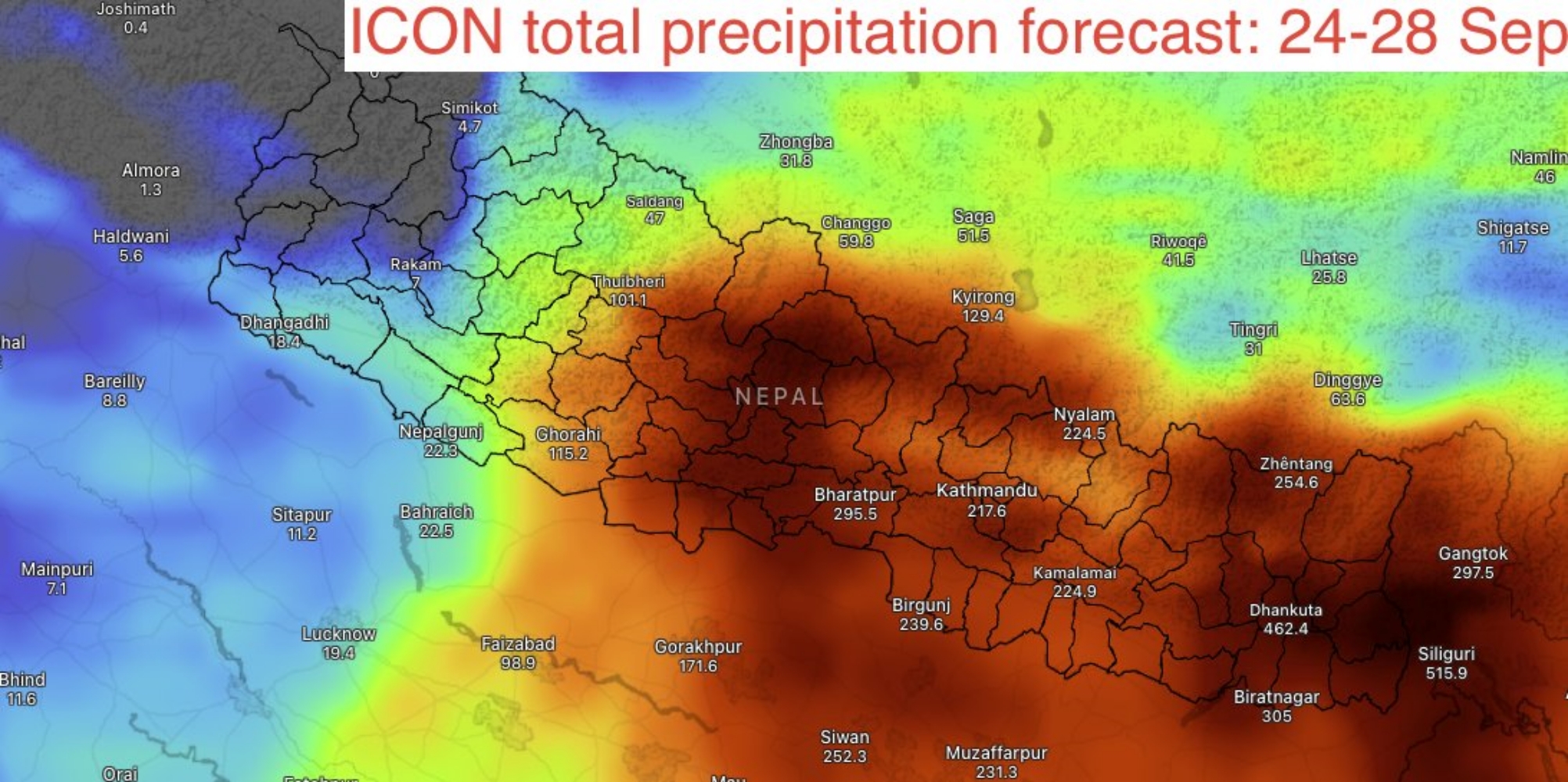
A depression over the Bay of Bengal set to hit the Odisha coast may intensify into a cyclone, veer north and threaten heavy rain in the Bhote Kosi-Trisuli valley that was ravaged by an ice-rock avalanche flood last month.
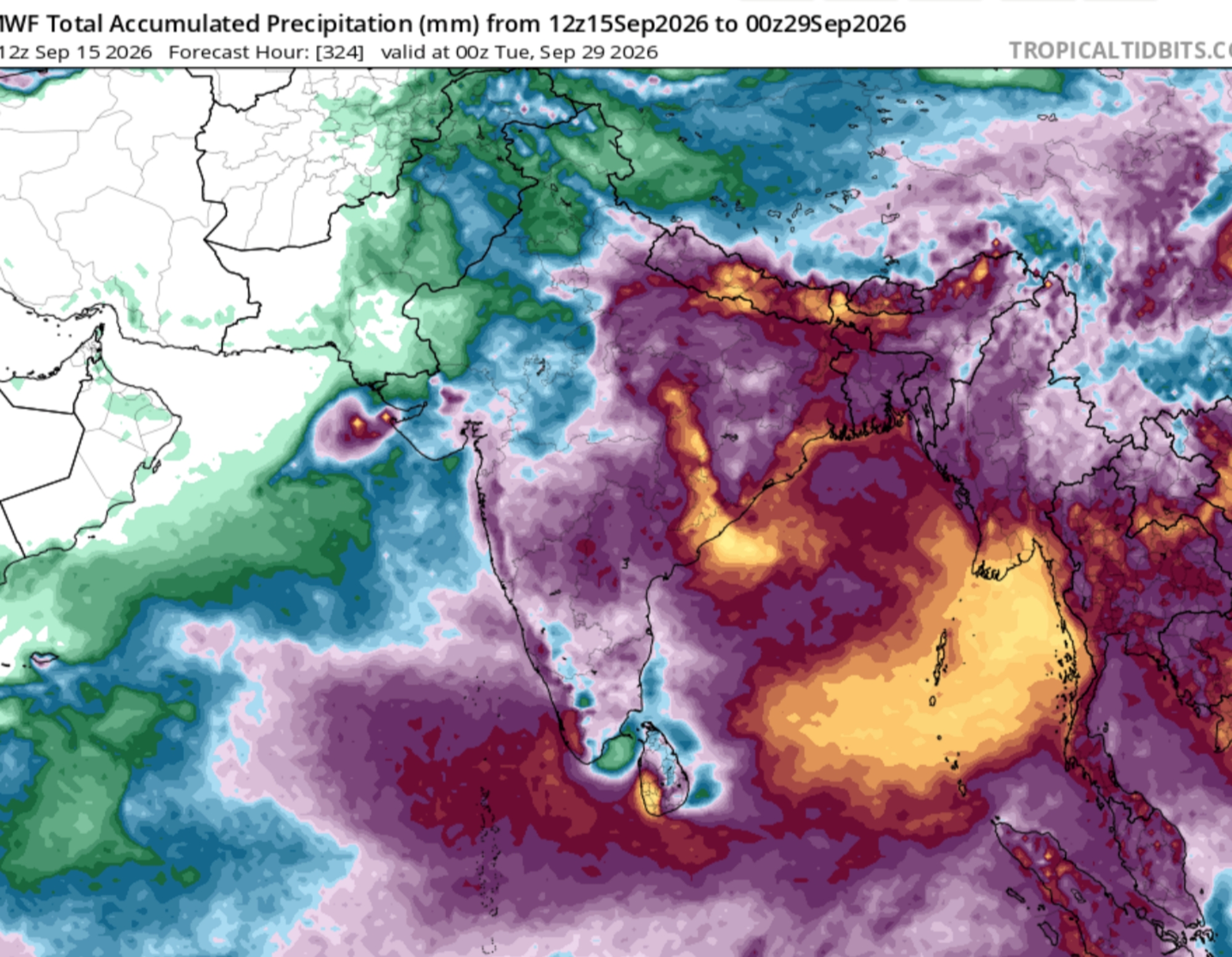
Even though the weather system is still a depression, it has already been given the name Arnab in case it develops into a cyclone. Most weather models predict heavy late-monsoon showers over northern India and Nepal.
“The westerlies are very strong this year, and this may block the system coming from the Bay of Bengal north towards Nepal, causing heavy rainfall,” says Archana Shrestha of the Department of Hydrology and Meteorology, which is working on a more detailed forecast with special focus on Rasuwa and Nuwakot as well as for mountaineering expeditions.
“Even moderate rain could destabilise already fragile slopes and also push new sediment from last month’s flood,” she adds. “We are analysing the data and may have to alert rescue operations to be stopped when we expect periods of heaviest rain.”
In addition, there are about 1,000 mountaineers from dozens of expeditions on Mt Manaslu (8,163m) in central Nepal this autumn season. Of them, 461 are foreigners, and there have already been four fatalities.
Two of those deaths on Sunday of a German national and his Nepali high altitude guide occurred during an avalanche near Camp III, and most climbers have decided not to exploit the present weather window to push for the summit. They have gone back down to Base Camp to wait out the weather and also avoid objective danger from avalanches.
Various weather models forecast between 400mm-600mm of rainfall in four days from 23-27 September over various parts of Nepal. For comparison, the annual rainfall in western Nepal, which is expected to get a brunt of the precipitation, is about 500mm.
The system is so big that it will cover the whole of Nepal and will also affect the Bhote Kosi-Trisuli basin where there is a vast amount of sediment brought down by the flood on 26 August as well as a previous one in July last year.






Comments
0 commentsNo comments yet — be the first.